
AI is widely used in our modern world now, whether it's for maths, teaching, marketing, content creation or wall to see what sticks, it has certainly become an integral part of our world. But how will that shape the future of SEO?
Contents:
My first question is: How many of you use AI on a daily basis? My next question is: How many of you use AI to find out information or to check the legitimacy of things? There is one thing that I have noticed that's changed the way I see the potential of AI. I've noticed that whenever I have a question that I need answered or I want to find something out my immediate response is to Ask my AI Friends.
I'm sure we've all heard the saying "I don't know, I'll Google it!" well my response has become "I don't know, I'll ask my AI friend!", I specifically downloaded edge on my phone so I can have Co-pilot built into it. It's certain to say that AI has made a huge impact on the world, and in just 1 year, we've made amazing progress - some would say scary amounts of progress - but this has led to a question of whether or not AI is the future of our informational network.
AI is certainly a great piece of technology that we've managed to create, and while the "AI" that we know today isn't exactly AI it's a step in the right direction.
One this is for certain and that (especially if you sign in with an account) AI knows about you, whether or not it's from chats is a different thing. Using Copilot as an example when logged it will always replay with a statement followed by my name - now obviously this is because it pulled the data from my account - but that's not all. On several occasions the AI has personalised answers to me based off previous interactions and the more I engage with the AI the more it seems to learn about me and how I like to interact with it.
AI has access to billions of piles of data and when asked a question it filters through all of it and gives you an answer that's personalised and easy to understand. Spend 1 min asking the AI the same question or spend ages scrolling through a blog post on Google to find the answer. It's without a doubt that AI can pull the correct information and then put it in an easy to understand format in a matter of seconds.
Unlike humans AI don't need breaks to recharge or sleep, so they are available 24/7 - unless if their servers get shutdown - and therefore can be used at any time of the day. No matter if your a night owl or an early bird the AI will be available to help you, we're humans and sometimes we get that eurika moment and have to do something right away, AI is there to assist, learn and help you learn no matter the time.
AIs are becoming more adaptable, and when giving them prompts, the more precise you are the more precise their answers become. AI can handle multiple topics being covered inside of one chat, you can even ask it to remember things for later so you can recall it when it's needed or relevant.
One thing a lot of people I know struggle with is having to many ideas and never being able to sort them out or prioritise. Having an AI companion can help you by having a second brain to help organise thoughts and priorities It becomes helpful to be able to bounce ideas and get some feedback then and there.
While AI may be a great step in our technology, there are still some problems that need to be fixed or alleviated.
It's not without saying that AI useses a lot of power, from training new models, running AI models, to having data centers, it's safe to say that without power AI wouldn't exist. AI can use so much electricity that it's global impact on our electricity infrastructure is growing significantly, and can cause some problems down the line.
One thing to say is that some AIs can become bias due to a phenomenon called algorithmic bias. This is when the data that it is fed and trained upon Is bias in some way or another. One example of this was a company trained an Ai to detect when peoples eyes were open but due to not using Aisians inside their data pool the AI become bias and was unable to detect what it was not trained on.
AI get's it's data from all around the world, some are private data sources while others train their data models using public data sometimes data is bad and inaccurate so it's understandable that facts that AI gives can be wrong and that's why they ask you to check everything - just make sure you don't ask chat GPT how many r's are in strawberry.
One main problem we are seeing is that many people are over-relying on AI, specifically generative AI (Chat-GPT, Copilot, Grok). We've seen a major rise in the amount of people who use AIs to just simple have a conversation with "someone" and while it can be okay to ask it to humor you for a little while, but many people are over using them to replace human connection. While using AI is beneficial we should try and not become reliant on AI. AI is a tool not a replacement just yet, and AI shouldn't replace human connection unless we get androids - but I doubt that's happening anytime soon.
Is AI the Future of Search?
While I was using AI the other day to ask it a question I pondered to myself why I didn't "just Google it", and while I was thinking about the reasons why I started to wonder if asking AI for the information is the future of what we call "searching". Think about it, you tell AI the type of project that you want to build and you ask it to help you find some companies that can help you. In a matter of seconds the AI filters through companies on the world wide web and then boom give you a persoanlised answer to how each one can help you and some sort of price range (if you asked it for one).
That was just one example of how AI could renovate the way we use the term "search",another example would be that you ask it a question regarding something, for example you ask it what the difference between a mushroom and a toadstall is. and it comes back with this:
The terms "mushroom" and "toadstool" are often used interchangeably, but they do carry different connotations:
In essence, the key difference lies in perception: "mushroom" is more neutral and scientific, while "toadstool" tends to carry a negative or cautionary tone. However, there's no strict scientific distinction between the two!
The point I'm trying to make is Google search uses keywords to determine how relevant and reliable a webpage is regarding a search term or phrase, but what if we swapped the "keyword-focused" search algorithm for a data driven "AI Search". It may not feel like it but everytime you ask AI a question it searches through it's data or the web and constructs an answer for you. AI could reshape the way that searches are done and change Search Engine Optimisation (SEO) to Generative Engine Optimisation (GEO)
Search Engine Optimisation (SEO) is a cornerstone of digital marketing, designed to improve a website's visibility and ranking on search engine results pages (SERPs). It comprises two primary strategies: on-page and off-page SEO. On-page SEO focuses on optimising elements within your website, such as content, meta tags, and URL structure, to attract traffic and improve search rankings. Conversely, off-page SEO centres around building your website’s authority and trustworthiness through external factors like backlinks, social media signals, and brand mentions. Together, these strategies create a comprehensive approach to SEO, ensuring your website ranks well and delivers value to its audience.
On-page SEO is the act of optimising pages and content on your site to build traffic and appear higher in the search rankings. On-page SEO is all about focusing on the internal factors of your site and how you can make each one better.
On-page SEO covers a wide range of internal factors that can affect your SEO rankings all of which include:
SEO has lots of different strategies that cover many aspects of the site, on-page SEO focuses on different aspects. These include:
Off-page SEO refers to SEO strategies that are performed outside of your website to improve your site's search engine rankings. Off-page SEO is all about focusing on external factors like your site's authority to boost your site's position on the search engine results page.
Off-page SEO covers a lot of different aspects but the main parts include:
Off-page SEO has a wide range of different strategies and they intertwine with on-page SEO a lot, these include:
While on-page and Off-page SEO work great together they aren't the same thing. On-page SEO focuses on the things to optimise on your site, whereas off-page SEO focuses on optimising things off your site, however, each one plays a crucial role in search engine optimisation strategies.
A lot of the factors that impact on-page SEO is to do with the elements and content that is on your site and how they relate to your chosen keywords.
The quality of your content doesn't just mean it's well written but it also relates to key SEO factors. For your content to be effective and high-quality it needs to be, relevant, original, attend to search intent and engage with your audience. For your content to work it has to be relevant to the keyword that you're using and the search intent behind the keyword. Search intent affects the length of your content, for example, if they want to find out information (informational intent) then a long-form piece of content will work great, however, if they are looking to buy (commercial intent) then short-form content with a CTA will work great.
Your keywords are one of the pillars of SEO and without them, you wouldn't know what to rank for, when optimising for keywords you should make sure to integrate them into the content, titles, headers, and URL. However, always ensure that your keyword fits naturally where you put I, does it make sense where it is?
You should make sure to craft compelling, keyword-focused titles that are within 50-60 characters and that your meta descriptions are 150 - 160 characters with a call-to-action and your focus keyword.
When creating URLs you should keep them concise and include primary keywords for clarity and SEO benefits and you should avoid special characters and maintain a logical structure, e.g., domain.com/parent/child).
Internal linking helps pass what we call "link juice" to other pages when adding internal links you should use descriptive anchor text that reflects what is linked and ensure that important pages are reachable within a few clicks from the homepage.
When trying to optimise your images for SEO there's some things you should know. Alt texts are a great way to include keywords so use descriptive text and include keywords to help your image rank in the image search, ensure you compress any image so it doesn't affect page loading speed and you should use keyword-rich filenames.
Off-page SEO encompasses activities and signals outside your website that influence your search engine rankings. These factors help establish your website’s authority, relevance, and trustworthiness.
Backlinks are one of the most critical factors in off-page SEO. A backlink is essentially a vote of confidence from another website, signalling to search engines that your content is valuable and trustworthy.
While social media signals are not direct ranking factors, they play a vital role in off-page SEO by amplifying content reach and visibility.
Mentions of your brand across the internet, even without a direct backlink, are becoming increasingly significant in off-page SEO.
Guest blogging remains a popular off-page SEO strategy, allowing you to showcase your expertise while gaining backlinks from reputable websites.
Customer reviews on platforms like Google, Yelp, and Trustpilot significantly impact your online reputation and, by extension, your off-page SEO.
Collaborating with influencers is a powerful off-page SEO tactic that can amplify your brand’s visibility and drive traffic to your site.
Social bookmarking sites, such as Reddit, Pinterest, and StumbleUpon, allow users to save and share links to content.
Off-page SEO thrives on the distribution of high-quality, shareable content. Creating blogs, infographics, videos, and other resources that resonate with your audience can lead to increased sharing and linking from other websites.
Both on-page and off-page SEO are essential components of a successful digital marketing strategy. On-page SEO ensures that your website is technically sound, user-friendly, and optimised for search engines, while off-page SEO builds your authority and trust through external validation. Though distinct, these two strategies complement each other, working synergistically to improve your website's visibility and performance. By understanding and implementing these techniques, you can drive more organic traffic, enhance user engagement, and achieve sustainable growth in the competitive online landscape.
Optimising your homepage is one of the most critical steps in improving your website’s SEO performance and user experience. Every element on your homepage, from meta titles and descriptions to image optimisation and internal linking, plays a vital role in attracting visitors and guiding them through your site. This checklist breaks down essential components such as meta tags, headings, homepage sections, and footer optimisation, providing actionable tips to help you enhance your website's visibility in search engines and ensure a seamless experience for your users.
One of the first things that you should check is your meta description and title to make sure that it's as optimised as possible. Here are some tips for optimising your meta title and description:
Meta Title
Meta Description
The next thing you should look at is your H1 or main title of the site as this lets search engines know the topic of your page or blog. Here's some tips:
Your heading distribution is also important to your site's SEO success first and foremost your H1 tag is the most important and prominent followed by H2, H3, H4, H5, and H6 with H6s being the least important. Make sure you use the correct H tags for your pages.
Ensure that your homepage has links and mentions to your other core pages (services, contact, about, etc)
Make sure that on your homepage you clearly state what makes your business unique and why visitors should choose you, make sure to position it prominently and use persuasive and concise language to communicate value.
Make sure to compress images to improve load time without sacrificing quality make sure to add alt text to describe the image content and include primary keywords when relevant.
Optimise your footer and make it so it links to those crucial internal pages like about, blog, contact, services, etc. Include your business address, phone number, and email for local SEO.
A well-optimised homepage is the cornerstone of any successful SEO strategy. By following this checklist, you’ll ensure that every aspect of your homepage is designed to attract search engines and engage your audience. From crafting compelling meta tags to strategically using headings and optimising your footer, each detail contributes to better rankings, improved user experience, and higher conversion rates. With these best practices in place, your homepage will serve as a powerful gateway to the rest of your site and a valuable tool for achieving your online goals.
Understanding search intent is fundamental to creating content that meets users' needs and aligns with search engine algorithms. Search intent—also known as user intent—reflects the purpose behind a user's search, whether they are looking to learn, navigate to a specific website, make a purchase, or research products. Tailoring content to match these different intents is critical in achieving visibility and engagement in search results. By analysing the types of search intent and learning how to optimise for them, content creators can improve the relevance of their pages, meet user expectations, and boost search rankings. This guide provides a comprehensive look into search intent, offering insights on identifying intent, aligning content, analysing user behaviour, and leveraging tools to ensure that each page serves a clear purpose.
Search intent is the purpose or goals behind a user's online search, reflecting what they aim to find, learn, or accomplish, such as looking for information, purchasing, or finding a specific website.
Contents:
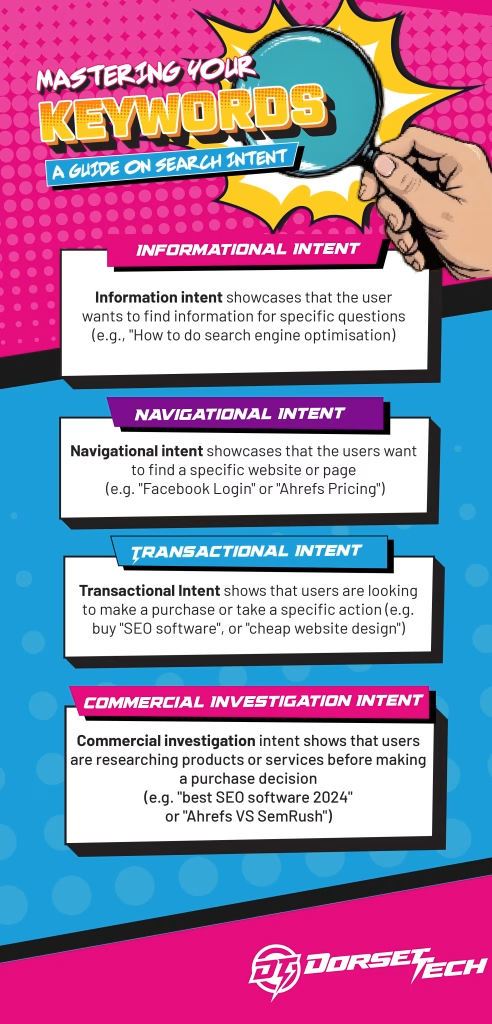
Information intent showcases that the user wants to find information for specific questions (e.g., "How to do search engine optimisation)
Navigational intent showcases that the users want to find a specific website or page (e.g. "Facebook Login" or "Ahrefs Pricing")
Transactional Intent shows that users are looking to make a purchase or take a specific action (e.g. buy "SEO software", or "cheap website design")
commercial investigation intent shows that users are researching products or services before making a purchase decision (e.g. "best SEO software 2024" or "Ahrefs VS SemRush")
Understanding and leveraging search intent is crucial for providing relevant answers to users and improving search rankings. Here's how you can match content types to the four main types of search intent:
For users seeking information, educational and comprehensive content is most effective. Common types of content include:
Users with navigational intent already know the brand, website, or specific page they want to visit. Content for navigational intent should be easy to find and should include:
Transactional intent indicates readiness to purchase or take an action, so content for this intent should be optimised for conversions and include:
Users who are researching before making a purchase respond well to content that helps them compare and evaluate options. Suitable content types include:
User Behaviour signals are signs showcasing how users interact with content on a webpage or in search results, providing valuable insights into whether a site meets their needs. These can include, click-through rate (CTR), dwell time, bounce rate, pogo-sticking, pages per session, conversion rate, and more. Search engines use these signals to determine factors like content relevance, quality, and user satisfaction.
A user's intent can shift based on seasonal trends, where they are in the buyer's journey, current events, and cultural shifts. Understanding how intent changes with trends allows content creators and marketers to adapt content strategies, ensuring that content remains relevant and engaging.
Search intents can be seen inside of the search engine results page (SERP) and analysing the layout and features of it for different search intents provides valuable insights. The SERP elements that appear as featured snippets, shopping ads, or video results- can reveal the dominant search intent behind a query.
When creating content, it's essential to focus on a single, clear search intent per page to avoid confusing users and search engines. Trying to satisfy multiple intents on one page can dilute the page's effectiveness, reduce relevance, and hinder rankings.
Incorporating search intent into content strategy is essential for maximizing relevance and search visibility. By focusing on a single, clear intent per page, aligning content with the user's needs, and adjusting for seasonal or trending shifts in intent, websites can create a better user experience and achieve higher rankings. Analysing user behaviour signals and SERP features further helps refine content to satisfy search intent precisely, allowing for more effective engagement and conversion. As search engines continue to prioritise user satisfaction, content that closely aligns with specific search intents will remain crucial in standing out and delivering real value to users.
Featured snippets appear higher than the other organic search results in what search marketers call "position zero", knowing how to get this spot and fight for it is a great skill. So in this blog, we are going to be breaking it down into 7 steps to get you your own featured snippets.
A featured snippet is a summary of an answer to a user's search query, displayed at the top of Google's search results page. This snippet is often referred to as "position zero" and is extracted from one of the top-ranking websites (this doesn't have to be the first one) It can appear in various formats such as paragraphs, lists, tables, or even videos.
Start by researching keywords and questions that users frequently search for, particularly those that trigger featured snippets. Tools like Google Search Console, Ahrefs, Answer the Public,
Structure your content in a way that directly answers common queries in a concise and informative manner. Aim for answers that are around 40-60 words, as this is the typical length Google extracts for paragraph snippets.
Organise Your Content In Formats That Google favours for snippets, these include paragraphs, bullet points, numbered lists, and tables. This makes it easier for search engines to extract and display your content.
Go beyond just providing concise answers, ensure that your page also offers in-depth content surrounding the topic. This helps demonstrate authority and increases the chances of ranking higher in the search results.
Structure your content with a clear heading structure (H1, H2, H3, H4, H5, H6) that match the types of questions users might search. This not only allows Google to find and prioritise sections of your page but also helps Google understand if the content is relevant to your site.
Research shows that many featured snippets are pulled from voice search queries, so aim to optimise for natural language and conversational queries. Answer "how, what, where, when, and why questions.
Regularly review your performance in search results, and update your content as necessary to remain relevant. Refreshing your content with new information will not only help maintain your featured snippet but will also let Google know that the content is fresh and relevant to the search queries.
By following all the steps highlighted inside this blog you will be armed with the knowledge necessary to be able to get a featured snippet!
In this blog, we will dive deep into the 3 main ways of building backlinks to your site. Whether you are trying to build backlinks via guest blogging strategies or by creating high-quality linkable content, this blog contains the information you need, from the different strategies to the benefits behind each one.
What is Linkable Content?
Linkable content is high-quality, valuable content created to attract backlinks from other websites. This type of content is typically informative, engaging, or unique, offering something valuable.
Linkable content is beneficial as it drives organic growth and improves a website's authority, visibility and search engine rankings. Your domain authority (DA) plays a huge role in where you rank on the search engine results page (SERP). When sites link to yours they pass on what we like to call "link juice", this link juice then lets search engines know that your site is relevant, up-to-date and useful this helps you rank higher on search engines. Having high-quality content that helps your viewers understand that your site is up-to-date and that you care about the quality of the content also gives your viewers confidence that your brand is trustworthy.
Guest blogging is a topic that's talked about a lot when it comes to backlinks and content marketing, and it can benefit your company's marketing efforts greatly if done correctly. In this section, we will talk about the two main types or sides of guest blogging and how they can benefit your company.
This side of guest blogging is the most commonly talked about, this is the act of finding blogs online that allow guest blogs and are related to your industry. This involves four main steps:
Increased Exposure and Brand Awareness:
Guest blogging allows you to tap into a new audience, expanding your reach beyond your existing followers. By contributing high-quality content to established blogs within your industry, you can introduce your brand to potential customers or clients who may not have encountered your site before.
Building Credibility and Authority:
Publishing insightful and valuable content on reputable blogs helps position you as an expert in your field. This not only enhances your personal or business brand's credibility but also builds trust with a broader audience, which can lead to greater influence within your industry.
SEO Benefits Through Backlinks:
Most guest blogging opportunities include the ability to add links back to your website, which can significantly improve your site's search engine ranking. These backlinks from high-authority sites signal to search engines that your content is valuable and credible, which can enhance your overall SEO strategy and drive more organic traffic to your site.
Another way to get backlinks from guest blogging is to reach out to your customers that you believe are a good match for your services or product. For example, if you are a web design agency and one of your customers is a kids club site you could write a blog article all about the "benefits of great web design for kids clubs". The steps involved are very similar to the other methods of guest blogging.
Access to a Pre-Established Audience:
By guest blogging on your customer's site, you gain direct access to their existing audience, which is often already interested in the niche or industry you both operate in. This can help you quickly expand your reach and connect with potential clients or customers who are likely to be receptive to your content.
Enhanced Brand Collaboration and Trust:
Collaborating with a customer's site for guest blogging can strengthen your business relationship, showcasing a partnership that can build trust among their audience. This association with a trusted brand can elevate your credibility and make your message more impactful.
Mutual SEO Benefits:
Guest blogging allows both you and your customer to benefit from valuable backlinks, improving your SEO rankings. By linking to each other's content, both sites can gain authority in the eyes of search engines, leading to increased visibility and organic traffic for both parties.
In conclusion, guest blogging and building linkable assets are great ways not only to build trust and increase your visibility but it's also a great way to increase your domain authority and boost your chances of getting ranked higher in search results.
In this blog post, we'll take a deep dive into the components of on-page SEO, focusing on how to optimise the most crucial pages of your website. We'll explore best practices, key elements, and effective strategies to ensure each important page is fully optimised to attract and engage your target audience while boosting your site's visibility in search engine results. This blog contains checklists on each step to ensure you know exactly what to look out for.
On-page SEO is the act of optimising individual web pages to improve their search engine rankings and attract more relevant traffic. This includes optimising content, HTML source code, and other on-page elements like title tags, meta descriptions, headers, and images.
To sum up, while many factors contribute to effective page optimisation, this blog has equipped you with the fundamental knowledge to optimise your pages independently.
Creating a successful keyword strategy requires more than just selecting popular search terms; it involves aligning those keywords with the specific stages of the buyer's journey. Whether your goal is to attract new visitors, convert leads, or nurture existing customers, your keywords must be carefully chosen to meet the needs and intents of your audience at each stage of the buyer's journey. In this blog, we'll explore how to strategically use keywords during the Awareness, Considerations, Decision, and post-purchase stages, ensuring your content resonates with potential customers and drives them toward a successful conversion.
In the awareness stage of the buyer's journey, the user is looking to identify the problem or their needs, gather information around the topic and explore their options and services. The awareness stage is a great place to use informational intent keywords as the prospect is looking for information regarding their topic and problem.
Let's say you run a web design agency and you are looking at targeting the awareness stage of your buyer's journey, some keywords you may look for include:
There is a wide range of content types that you can use but which ones fit in the awareness stage? Well as the users are looking for information regarding certain topics and to identify problems or how they can solve it, your content has to match that intent. Content types inside the awareness stage include:
In the consideration stage of the buyer journey customers now have a clear understanding of their problem or need and are actively researching and evaluating different solutions. It's during this stage that customers are more likely to interact with brands doing things like: downloading whitepapers, attending webinars, or requesting product demos.
In this stage, your keywords should be more focused on providing information about solutions and companies that offer the solutions. These include:
In the consideration stage your content should be focused and tailored around the solutions that you provide. Some content types include:
During the decision stage, the customer is ready to make their final decision and purchase the solution. They have found the solutions that their interested in choosing and make the decision.
The goal of these keywords is to answer any questions the customer might have regarding your services or your company, these include:
in this stage, the point of the content is to help potential customers finalise their decision by providing the detailed information and reassurance they need to choose you. Content types include:
During the post-purchase stage, the customer has already made a purchase and is now focused on maximizing the value of their investment. This stage is crucial for building long-term relationships, encouraging repeat business, and generating referrals. It's essential to provide ongoing support, reinforce the customer's decision, and ensure they feel confident and satisfied with their choice.
The goal of these keywords is to address any needs or concerns the customer may have after their purchase, ensuring a smooth and positive experience. These include:
In this stage, the content should focus on providing value, support, and reassurance to ensure customer satisfaction and loyalty. Content types include:
This content should reinforce the value of their purchase, address any ongoing needs, and create opportunities for future engagement.
Aligning your keywords with your marketing goals is crucial for ensuring that your content reaches the right audience at the right stage of the buyer's journey. Depending on whether your goal is to attract new visitors, convert leads, or nurture existing customers, your keyword strategy will need to be adjusted accordingly. Here's a comparison of how different marketing goals affect your keyword strategy based on the buyer's stage:
Goal: To attract potential customers who are just beginning to recognize a need or problem.
Keyword Strategy: Focus on broad, informational keywords that match what a potential customer might search for when they first realize they have a problem. These keywords should be high-volume and related to the challenges or questions your audience is likely to have.
Examples:
Content Types:
Goal: To engage and educate potential customers who are evaluating their options and considering different solutions.
Keyword Strategy: Target more specific, mid-funnel keywords that reflect a deeper level of understanding and interest. These keywords should be more solution-oriented, showing that the searcher is actively comparing their options.
Examples:
Content Types:
Goal: To assist potential customers in making their final decision and choosing your solution.
Keyword Strategy: Use highly targeted, low-funnel keywords that show purchase intent. These keywords should align with what a potential customer might search for when they are ready to make a purchase and need reassurance or detailed information.
Examples:
Content Types:
Goal: To build loyalty, encourage repeat business, and generate referrals.
Keyword Strategy: Focus on keywords that address customer support, product updates, and continued education. These keywords should help ensure that your customers get the most out of your product or service and feel supported.
Examples:
Content Types:
By aligning your keywords with your marketing goals at each stage of the buyer's journey, you can ensure that your content strategy effectively guides potential customers from initial awareness through to post-purchase satisfaction. This approach not only drives traffic but also converts leads and builds long-term relationships with your customers.
Aligning your keywords with your marketing goals throughout the buyer's journey is essential for a comprehensive and effective content strategy. By understanding and targeting the unique needs of your audience at each stage you can create content that not only attracts and concerts leads but also fosters long-term customer loyalty. By thoughtfully planning your keyword strategy in line with your marketing objectives, you can ensure that your content remains relevant, engaging, and ultimately successful in driving business growth.


